 Getting started
 Pipeline
 Forecasts
 Deals
Deals Deals (advanced)
 Proposals
 Exports
 Resources
 Integrations
 Settings
 Glossary
 FAQs
FAQs Releases
Estimates 3.0
Mar 13, 2026
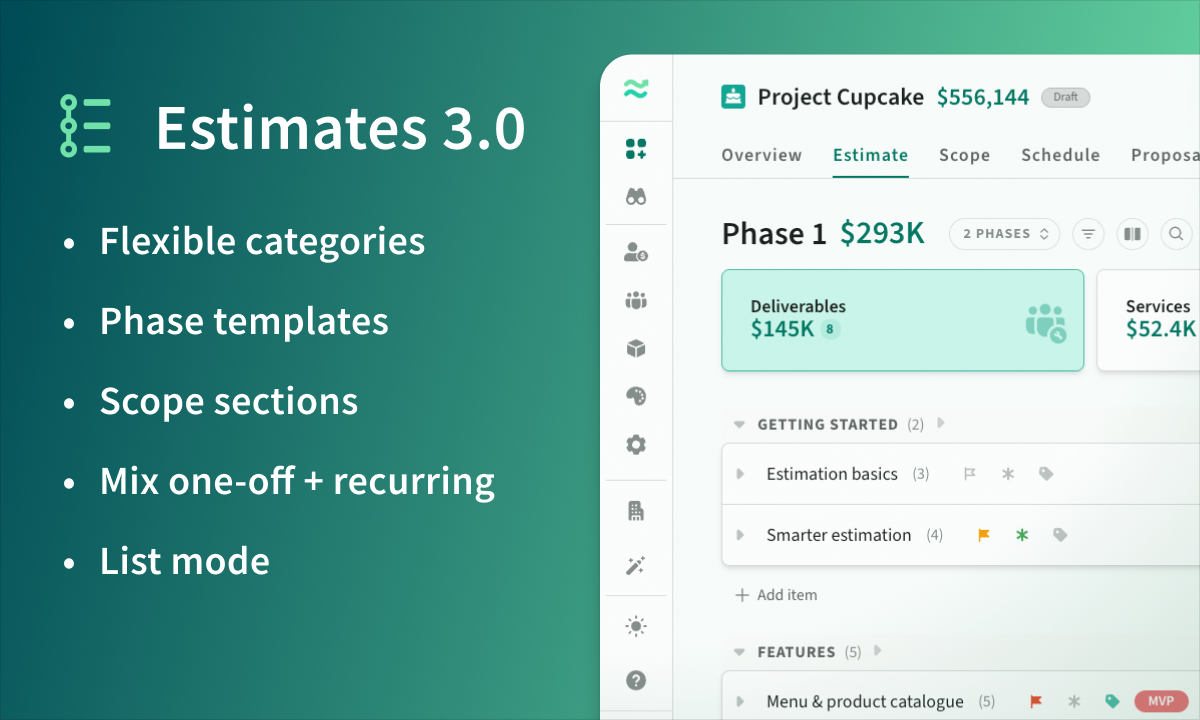
Estimates 3.0 gives you a more flexible way to model scope, with configurable categories, sections, and templates that better match how your team actually prices work.
Overview
- Replace rigid estimate types with configurable categories that define allowed resources and pricing models.
- Structure complex scopes with optional sections and clear subtotals.
- Create phases from templates so new deals start with the right category and section setup.
- Mix one-off and recurring pricing where needed, including role effort, products, and custom prices in the same category.
- Keep continuity for existing spaces with automatic migration and unchanged totals.
Flexible categories
We've replaced fixed estimate types with configurable categories, so teams can model work in a way that fits their process.
- Categories now control which resource types and pricing models are allowed.
- Sections can be used to group related work within a category, and show subtotals in scope, proposals, and exports.
- Scope is now organized as Phase → Category → Section → Item → Line item → Estimate.
- Categories are reorderable per a phase - determines order in proposals
- Renamed
featurestoitems, anditems(formerlytasks) toline items
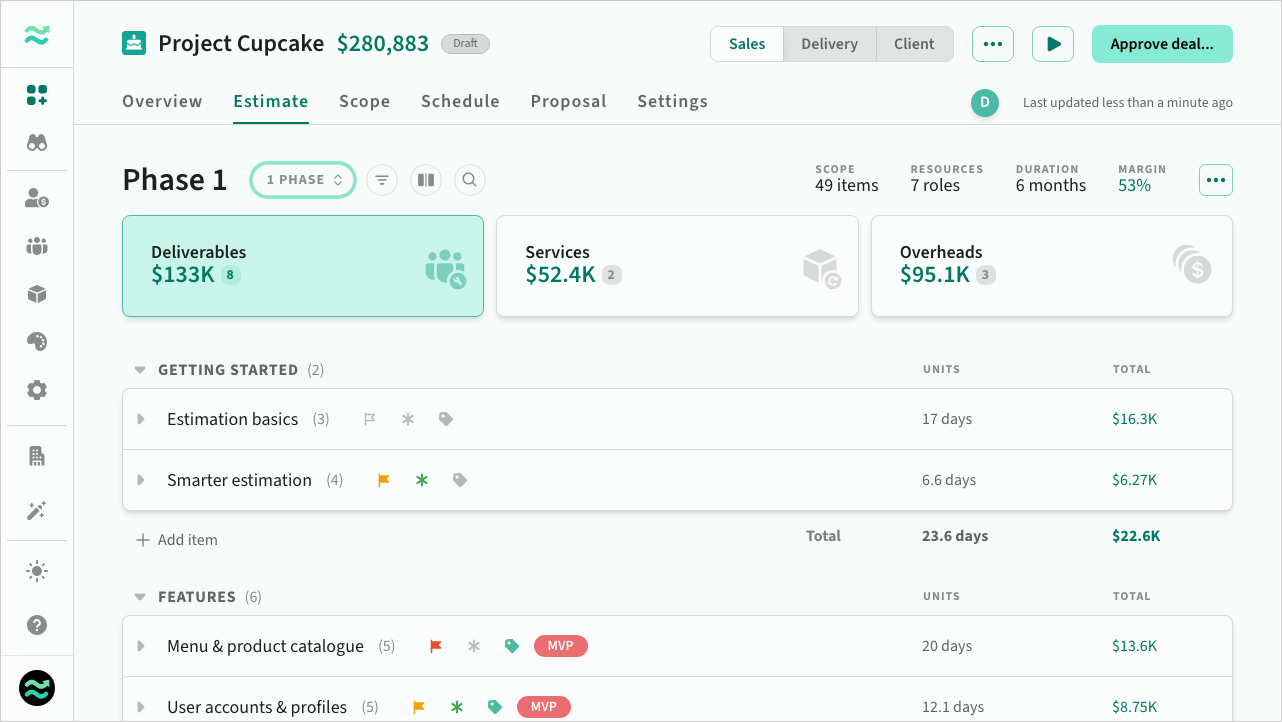 Editable categories and sections in Estimates 3.0
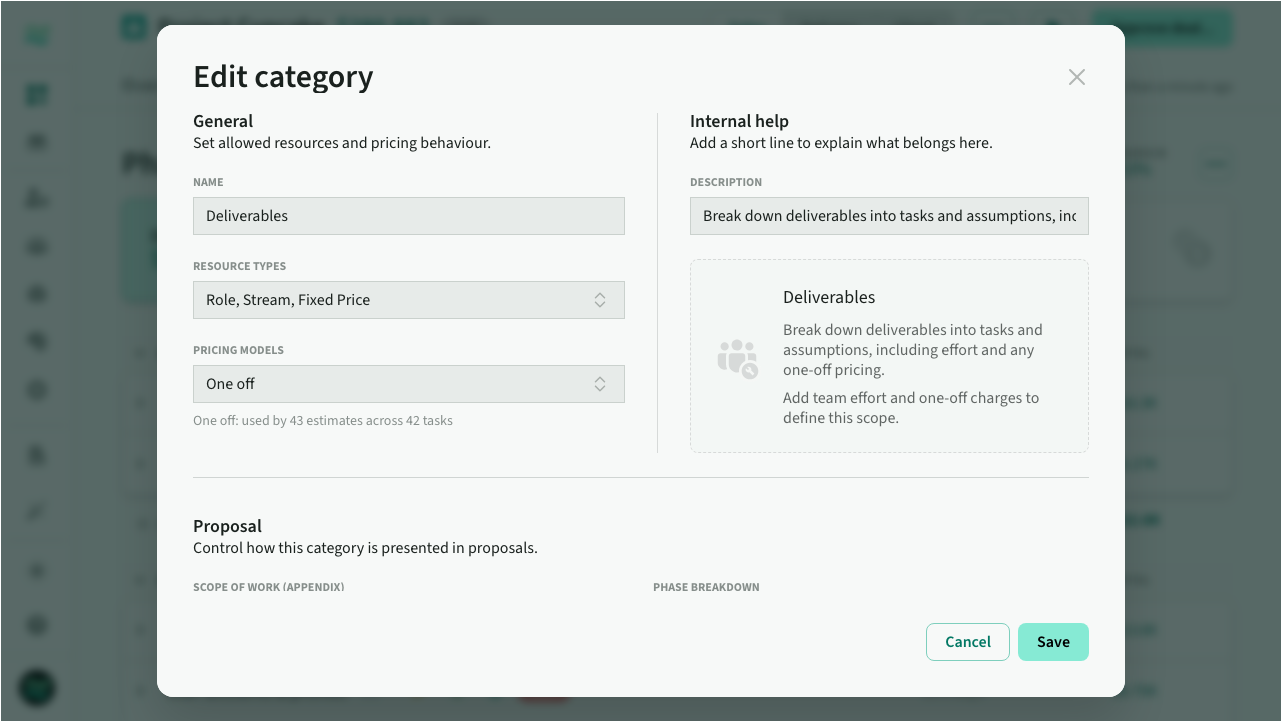 Per category rules for estimation and proposals
Phase templates
We've added phase templates in Settings → Estimates → Templates so you can start new work with the right structure.
- Templates define default categories, optional sections, and ordering.
- Teams can start from built-in templates:
- Classic for parity with the previous behavior
- Standard for a simpler setup with three categories: Deliverables, Services, and Overheads
- Blank for a simple single-category starting point
- New deals and added phases can start from the template you choose, reducing repetitive setup.
Practical examples:
- Discovery: Keep it lean with categories like Workshops, Research, and Plan; use mostly one-off estimates with optional recurring advisory support.
- Build: Separate core delivery from ongoing services with categories like Deliverables (one-off), Services (recurring), and Overheads (mixed).
- Run: Focus on continuous work using categories like Support, Maintenance, and Enhancements, with recurring estimates plus optional one-off change requests.
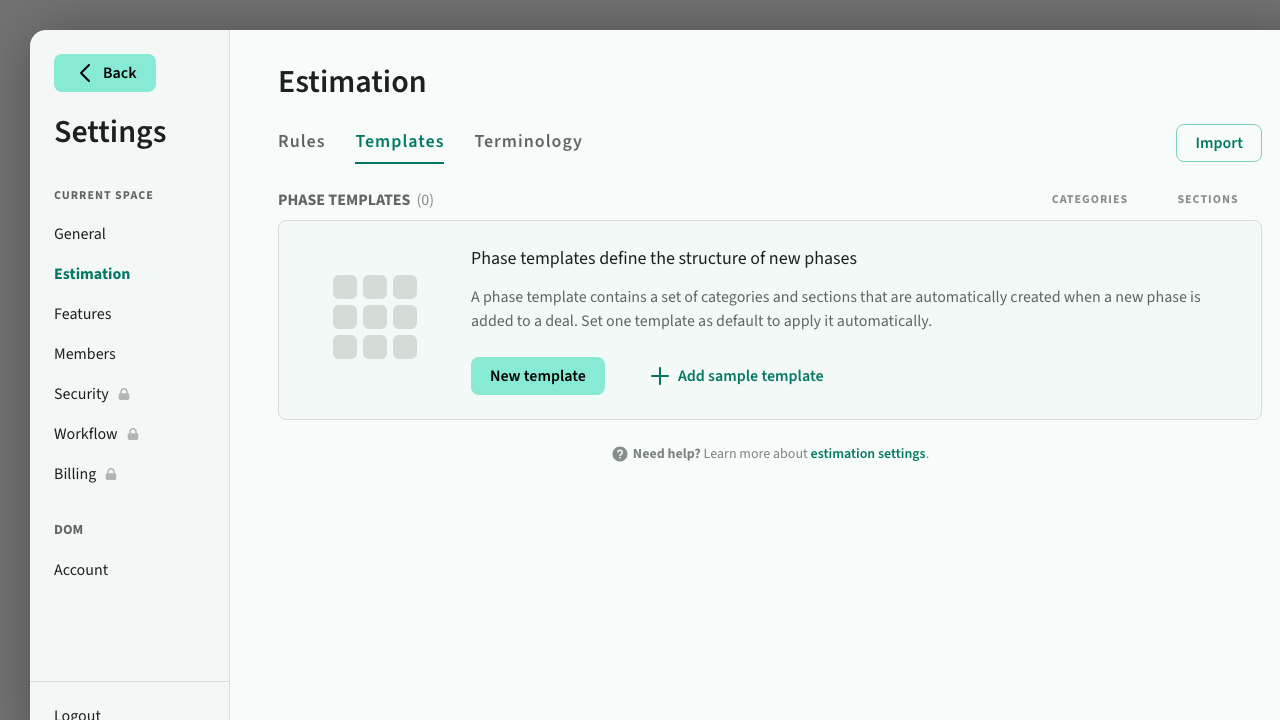 Phase templates
List mode
List mode shows all categories in a single tree, so you can scan and edit work across the phase in one view.
- Sticky headers keep the current category, section, and open item visible as you scroll (on both list and tab modes)
- Use the list/tab toggle in the phase header to switch between modes.
- A new estimates footer shows the total for the current page, and includes schedule rounding when present.
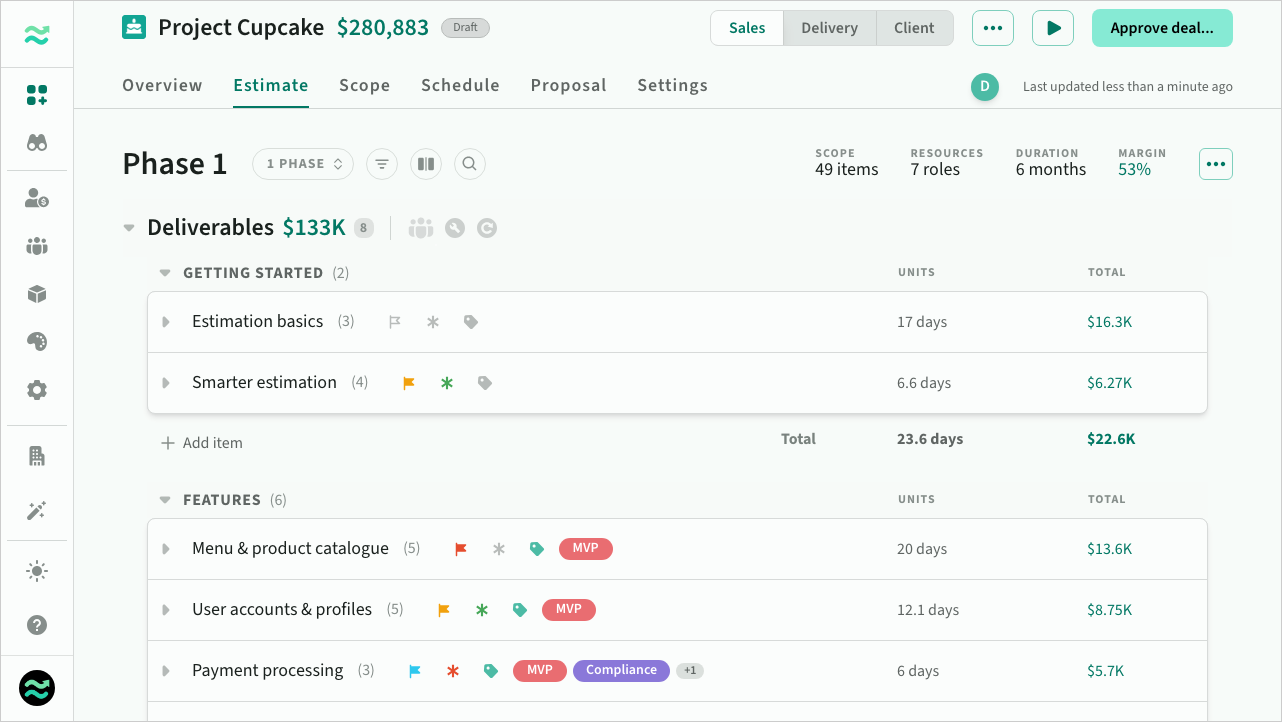 List mode
Additional changes
Estimates 3.0 also updates how estimates appear and behave across a deal:
- Overview:
- Category totals are grouped by category name across phases
- The category dropdown filters out phases without totals for that category
- Scope:
- Updated breakdowns, including sections and pricing model (fixed vs recurring).
- Search:
- Filters now reflect your actual categories and sections, plus pricing model and resource kind.
- Proposals:
- Group or split categories based on category rules with phases and appendices.
- Section headers appear in 'Scope of work' appendices.
- Exports:
- Overview sheet uses category totals grouped by category name across phases
- Scope WBS (work breakdown structure) includes named sections in the hierarchy
- All relevant sheets have additional category and section columns (name, id)
- Settings:
- Removed legacy terminology overrides for categories (see migration notes below)
Migration notes
Migration is automatic for existing deals and templates.
- Existing totals and pricing behavior are preserved.
- Legacy categories are mapped to equivalent dynamic categories.
- If you previously set custom terminology for your categories, it will be migrated into the 'classic' phase template.
- Existing workflows continue to work while enabling the new structure.
Guest users
- Guests now appear in presence tracking
- Guests can now export proposals to powerpoint
- Guests can no longer edit payment milestones (but they can still see them)
Misc
- Updated sample deal and deal tour to match the new model.
- Removed old space/deal terminology overrides tied to legacy categories (use phase category templates instead)
- Added new limits: 5 sections per category, 5 categories per phase, 10 phase templates per space.
- Increased the character limit for task descriptions (from 1024 to 2048 chars).
- Shift click expand/collapse toggle on a category or section to open/collapse all children.
- Minor UX improvements to proposals and deal overview.